
Is Your Online Store Ready for AI Shopping Agents Like Meta's Muse?
Key Takeaways
Muse is moving fast. Meta's Muse agent passed 5 million US downloads in 22 days. ChatGPT took 56 days to hit the same number (Sensor Tower, via Forbes).
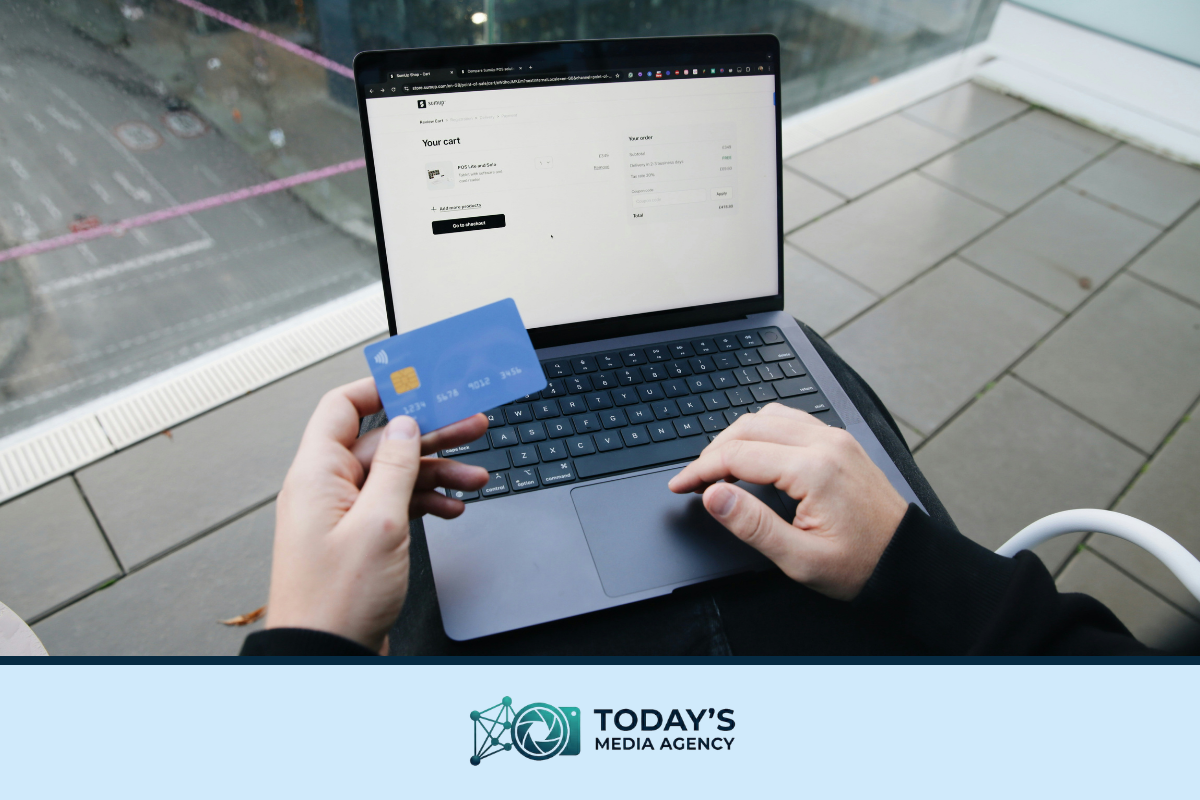
It can check out for the shopper. Muse shops, builds a cart, and pays through Link by Stripe or Shop Pay. The human still approves the total.
Your site is read by a machine first. Pretty layouts don't help an agent. Clean product data, honest prices, and a checkout it can finish do.
Four fixes get you most of the way: Product and Offer schema, accurate live data, an agent-friendly checkout, and a crawl-access audit.
No one has the formula. Meta has not published a Muse ranking recipe. Clean data removes the guesswork, but it carries no guarantee.
Your next customer might not have eyes.
A shopper types, "Find the best sleek desk lamp under $80 with strong durability reviews and buy it." No ads. No scrolling. No ten tabs open. An agent goes off, reads a pile of product pages, picks one, and comes back with a cart and a button.
If your store can't be read by that agent, you're not in the running, and you'll never know the sale existed.
What Is Meta's Muse, and Why Should Store Owners Care?
Muse is Meta's personal AI agent, and it launched September 8. Forbes reports it passed 5 million US downloads in 22 days, per Sensor Tower. ChatGPT needed 56 days to get there. Grok needed 103. Claude needed 492.
This agent shops. PYMNTS reports that Muse fills out forms in a browser and comes back when it needs approval to buy something.
Where a business accepts Link by Stripe, Muse checks out with the shopper's saved payment method. Everywhere else, Link issues a single-use virtual card for the approved purchase. CBS News reports Expedia and PayPal partnerships, and Shopify has brought Shop Pay checkout to Muse.
A huge, fast-growing audience now has a shopping assistant that never gets tired, never gets distracted, and never clicks your banner ad.
The AI Shopping Journey
From one prompt to a purchase.
The shopper describes what they need. The agent handles product discovery, comparison, and checkout preparation.
Describes a product, price range, and preferences.
Checks products, prices, reviews, and availability.
Chooses a product and prepares the transaction.
The shopper reviews and approves the purchase.
Does Muse Really Buy Things Without a Human?
Muse doesn't go fully solo, and that matters. Muse puts an approval card in front of the shopper with the order details, and nothing is final until the human says yes. Humans stay in the loop.
PYMNTS found that only 23% of US consumers trust generative AI to handle payments, even though 72% have used an AI assistant.
We said it when an AI cracked an 80-year-old math problem, and it holds here: humans do the buying. But the machine now decides which three products the human gets to look at. That's the part you can't ignore.
The shopper may also never see your website. When they pick a product, Muse either sends them to the retailer or, in supported cases, keeps the purchase inside the chat. Buyers already skip the click, a trend we mapped in The Zero-Click Apocalypse. Agents finish the job.
How Does an AI Shopping Agent Read Your Website?
Two ways, and you need to be ready for both.
- Through data pipes. Shopify, for example, describes a Universal Commerce Protocol, built with Google, that covers cart creation, checkout, payment, and post-purchase. Stripe, Microsoft, Amazon, and Visa are listed as backers.
- Through a browser, like a person. Muse runs in its own browser on a virtual machine. It clicks, reads, and fills in forms. It hits the same walls your human customers hit, only it gives up faster.
Two Paths to Your Store
Agents can read data or navigate pages.
A store needs reliable product information and usable shopping flows, regardless of how the agent accesses them.
Structured product data
Agents use supported catalogs, feeds, APIs, and commerce protocols to access product attributes, prices, availability, and transaction capabilities.
Website interaction
Agents navigate product pages, click buttons, fill forms, and attempt checkout through the storefront experience.
Either way, a beautiful website that hides its facts inside images and pop-ups is a dead end.
Structured data is the part an agent can trust. Think of it as handing the agent a spec sheet instead of making it read a brochure.
On Shopify? Eligible products flow into Shopify Catalog by default, and Shopify offers a free audit tool that checks a product URL for structured data and robots.txt access. Anywhere else, the work is yours. Here it is.
The 4-Step Agent-Readiness Checklist
Step 1: Put your product facts in schema markup
Add Schema.org Product and Offer markup to every product page, in JSON-LD. Google's merchant listing documentation requires a price and a three-letter ISO currency code, and recommends availability, a return policy (hasMerchantReturnPolicy), and shipping details (shippingDetails).
Do all of it. Spell out your return window, your delivery times, and your warranty in machine-readable form. Then run the markup through a validator and fix every error. A single syntax slip can make the whole block unreadable.
Meta hasn't documented schema as a Muse ranking factor, so we won't promise a result. Clean markup gives the agent no excuse to skip you. Our AI-Ready Blog Guide covers the same structure for your content.
Step 2: Keep your live data honest
Price, inventory, variants, and discounts have to match across your product page, your feed, and your checkout. An agent that finds $79 on the page and $94 at the cart moves on to the next store.
- Expose inventory and variant data through a fast feed or endpoint, REST or GraphQL, so an agent doesn't have to guess.
- Sync variant pricing straight from your store backend.
- Cache your feeds so a burst of agent traffic doesn't trip your rate limits.
Step 3: Build a checkout an agent can finish
Forced account creation, pop-ups, and CAPTCHAs stop agents cold. PYMNTS tested Muse on a simple toilet paper order and it took more than five minutes. On Amazon and Walmart, Muse couldn't shop until the tester shared account credentials through a secure link. Friction is friction, even for a robot.
- Offer guest checkout, with standard form field names so autofill works.
- Accept Link by Stripe, Shop Pay, or Apple Pay for tokenized payments.
- Kill the pop-ups that block the cart.
- Where you can, separate your human security challenges from verified purchasing flows.
Step 4: Audit who you're blocking
Security tools built to stop scrapers can lock out legitimate shopping agents. Check your robots.txt. Check your firewall and CDN rules. Then test with real agent sessions and watch what comes back.
Don't count on a single robots.txt line to save you. As of this writing, we couldn't find a published Muse user-agent to point you to. So run the test visits, and confirm your CDN returns the full page with no bot-challenge wall.
Technical Readiness
Four checks. One more accessible store.
Use these quick tests to uncover the most common obstacles between AI-driven product discovery and a completed purchase.
Schema markup
Product and Offer data covering price, currency, availability, returns, and shipping.
Live product data
Accurate pricing and inventory across the product page, feed, and checkout.
Checkout experience
Guest checkout, standard form fields, and supported tokenized payments.
Agent access
No accidental blocks in robots.txt, firewall settings, or CDN challenges.
Should You Block Muse Like Amazon Did?
Amazon confirmed to CBS News that it blocked Muse from shopping on its platform, citing security and user experience. Fair enough. Amazon owns the marketplace and the traffic.
You're probably not Amazon. If you block agents, make it a decision you made on purpose, with your eyes open. Don't let a firewall rule you forgot about make it for you.
Agent Readiness Is AI Visibility With a Credit Card
Everything above is the same game we play on the content side, only the prize is a purchase. AI systems reward brands with clean, consistent, verifiable data and punish the ones they can't parse.
That's Marketing Truth #2: consistency rules.
And it's why a clear, structured, well-cited brand ends up in the shortlist. We laid out the full picture in our recent AEO Game guide.
One more thing to check. Agents also pick up what the web says about you, well beyond your product pages.
If you haven't looked lately, see What Does ChatGPT Say About Your Business When You Aren't Looking?
Ready to Get Your Store Agent-Ready?
Want the DIY version? Grab our free 4-step technical checklist: Are You Ready for the Coming of Muse?
Prefer a pro? Today's Media prepares e-commerce storefronts for AI-driven shopping. Start with the Free AI Visibility Audit, or book a strategy call.
AI Shopping Readiness
Is your store ready for AI-driven shoppers?
Find out whether AI platforms recognize your brand, understand your offerings, and recommend your business.
Frequently Asked Questions
What is Meta's Muse?
Muse is Meta's personal AI agent. It can book travel, fill out forms in a browser, track prices, and shop, then ask the user for approval before it sends an email or makes a purchase. It launched in the US on September 8, 2026.
Can Muse buy something without my customer's approval?
No. Muse prepares checkout and shows an approval card with the order details, and nothing is finalized until the shopper approves. At businesses that accept Link by Stripe it checks out with the shopper's saved payment method. Elsewhere, Link issues a single-use virtual card for the approved amount.
Do I need to be on Shopify to be ready for AI shopping agents?
No. Shopify says eligible products are listed in Shopify Catalog by default and that merchants need no extra setup, which gives Shopify stores a head start. Every other platform needs the four steps in this post done by hand.
Will schema markup get my products recommended by Muse?
Nobody can promise that. Meta has not documented schema, feeds, or any ranking formula as a Muse requirement. Clean Product and Offer markup removes guesswork for any system reading your page, and that is the point.
Is Muse available outside the US?
Muse launched in the US, and the 5 million download figure cited here is US-only. Expect that to change, and prepare now, because the checklist helps with every AI shopping agent.
Should I block AI shopping agents in my robots.txt or firewall?
Only if you decide to on purpose. Amazon confirmed to CBS News that it blocked Muse from shopping on its platform, citing security and user experience. Amazon has a captive audience. Most stores don't, and an accidental block makes you invisible to a fast-growing group of shoppers.
How do I test whether an AI agent can use my store?
Run it like a customer would. Ask an agent to find and buy a product from your catalog. Record where it stalls: CAPTCHAs, pop-ups, forced account creation, mismatched prices, missing return terms. Fix the gap, then run the same request again.
Research and further reading
Sources
- Forbes — Meta's Muse AI Assistant Hits 5 Million Downloads, Outpacing Growth of ChatGPT, Grok and Claude
- Stripe — Stripe Helps Muse, Meta's New Personal AI Agent, Shop Across the Internet With Link
- TechCrunch — Meta's AI Agent Has Been Blocked From Using Amazon.com
- Shopify — What Is Shopify Catalog and How Does It Work?
- Shopify Help Center — Agentic Shopping Experiences
- Google Search Central — Merchant Listing Structured Data
Editorial Transparency
Who worked on this post



Three AI tools were used in the creation of this blog post to support research, drafting, editing, and optimization. Final direction, review, and publishing were completed by the Today’s Media team.